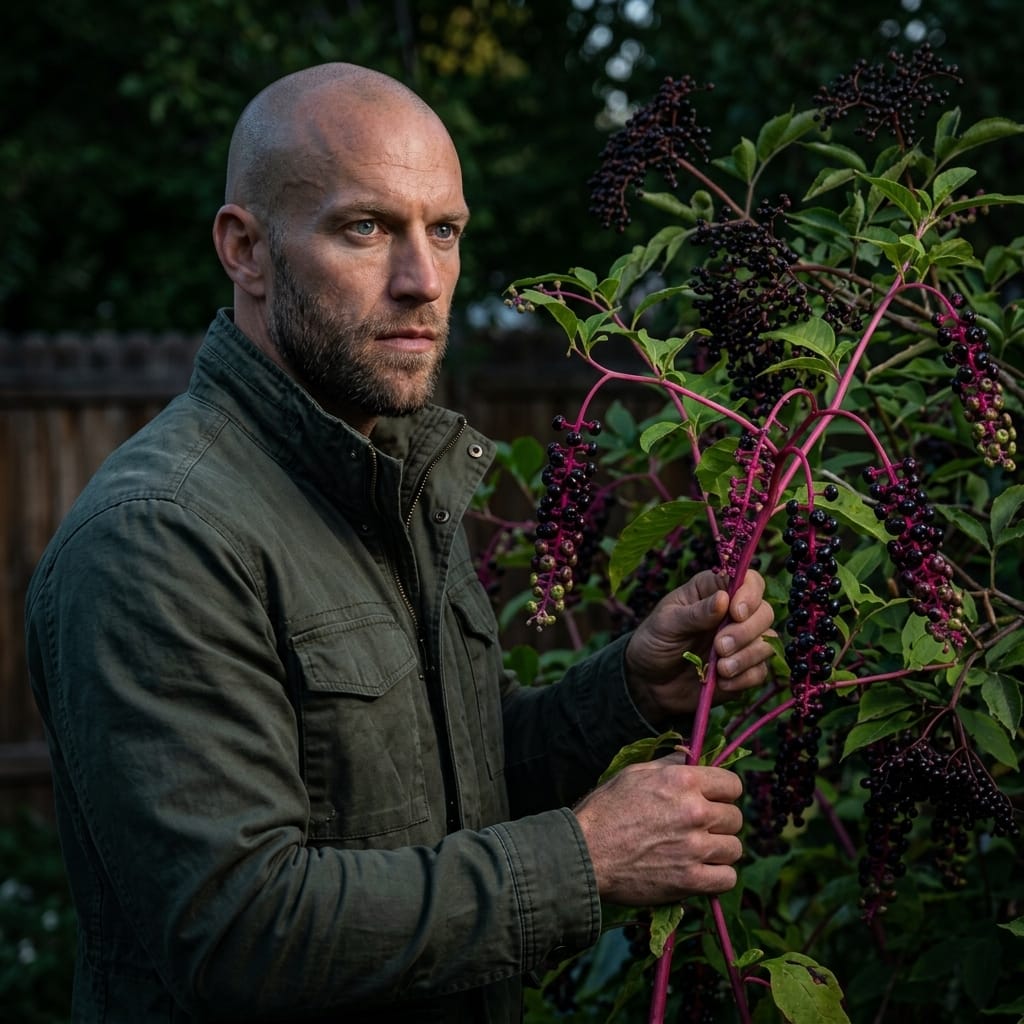
Elderberry vs. pokeweed is a risky backyard mix-up because both plants can carry dark purple-black berries that look harmless at a glance. That familiar berry look is exactly what makes people trust the wrong plant too quickly.
The hidden detail is that berry color does almost none of the real identification work here. What matters more is how the fruit grows, what the stems look like, and whether the whole plant behaves like a woody shrub or a fleshy upright weed.
Elderberry vs pokeweed starts with structure, not berry color
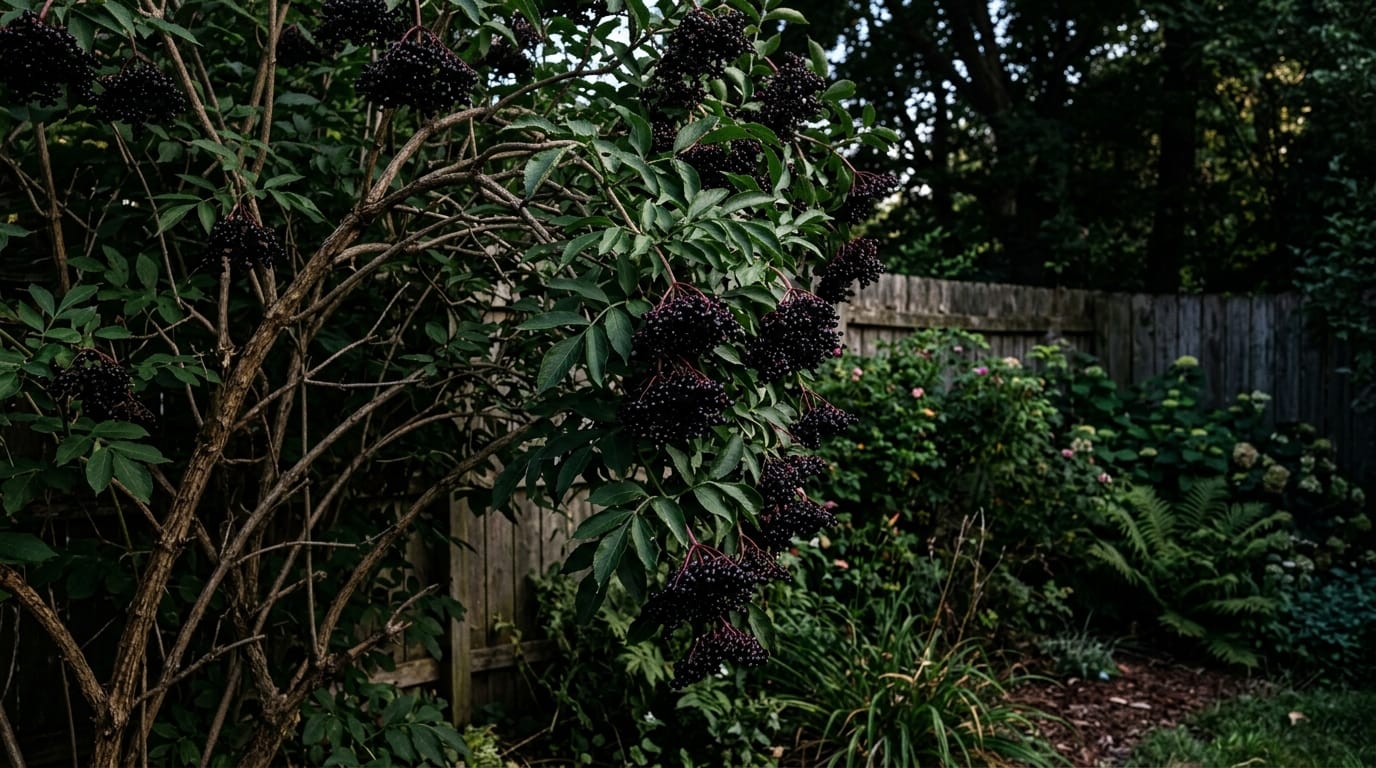
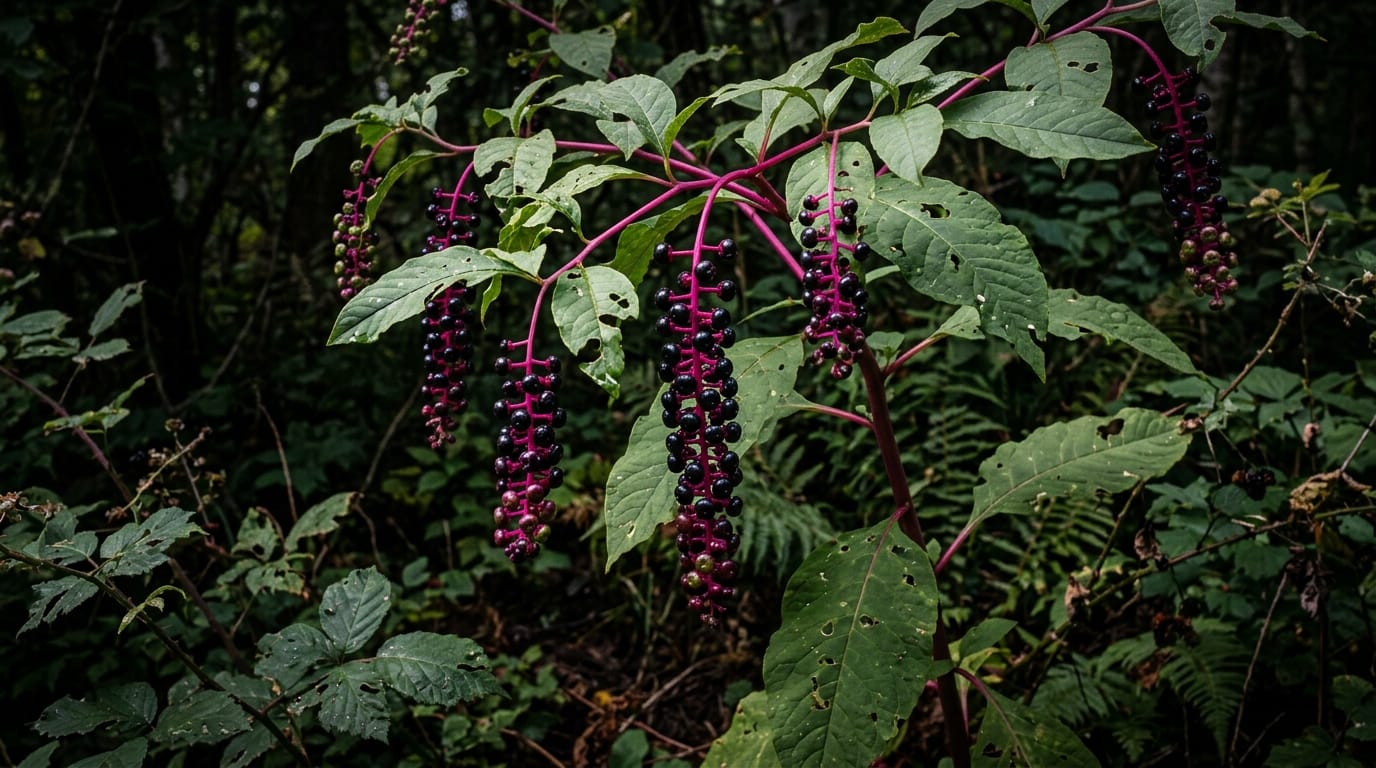
Elderberry vs pokeweed starts with structure because the berries alone are too misleading. Elderberry usually grows on a woody shrub and carries fruit in wider, branched clusters, while pokeweed grows on thick, fleshy stems and often carries berries on drooping stalks.
That difference matters more than people expect. A dark berry cluster can make two plants seem related when they are not even close in risk. If you only notice “black berries,” you are already using the weakest clue available.
- Elderberry: woody shrub, branching habit, broader berry clusters.
- Pokeweed: fleshy upright growth, thick stems, drooping berry stalks.
- Both: dark berries that can fool anyone moving too fast.
This is the same general safety pattern explained across the Backyard Lookalikes archive: the familiar-looking part of the plant is often the least trustworthy part.
Pokeweed usually gives itself away through the stems
Pokeweed usually gives itself away through its thick pink-to-magenta stems, which are one of the clearest visual warnings in the comparison. Elderberry does not usually present that same bold, fleshy, almost juicy-looking stem structure.
Once you know to look for those stems, the plant often stops feeling ambiguous. That does not mean one clue is enough for safe identification, but it does mean pokeweed has a habit of advertising itself more clearly than people realize.
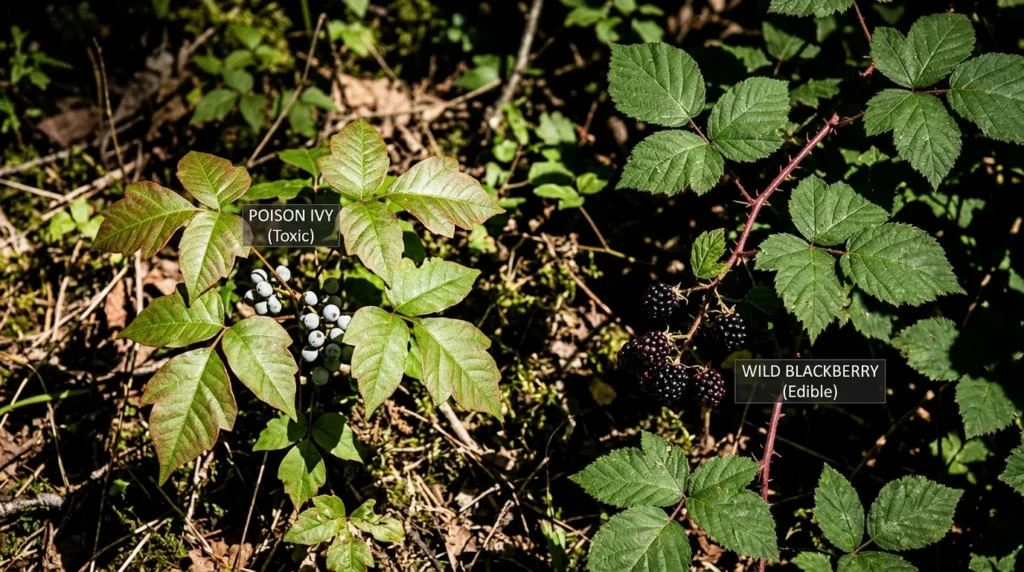
If you have already read Wild Grape Vine vs. Moonseed, this will feel familiar. In both cases, the first glance creates the confusion, but the structural details break it apart.
The real risk is trusting a half-correct backyard ID
The real risk is not just that pokeweed looks similar from a distance. The real risk is that it looks similar enough for someone to feel “probably sure” without checking the whole plant.
That is a bad habit in any backyard plant article, but it matters more when berries are involved. People trust berries too easily because fruit reads as familiar and safe. In reality, fruit color is one of the fastest ways to talk yourself into the wrong conclusion.
A safer check looks like this:
- Check whether the plant is woody or fleshy.
- Look at how the berries branch or hang.
- Look for strong magenta stems.
- Stop if the ID still depends mostly on berry color.
Why this confusion keeps showing up in real yards
This confusion keeps showing up because both plants can appear in the same kinds of semi-wild spaces: fence lines, overgrown corners, sunny yard edges, and places people do not inspect closely until berries appear.
It also matters because pokeweed is genuinely toxic. The berries, leaves, stems, and especially the root contain compounds that can cause nausea, vomiting, cramping, and diarrhea when eaten, and children are at higher risk because a handful of berries is a larger dose for a smaller body. Elderberry is edible when it is ripe and cooked. Pokeweed is not a plant to sample at all. If someone has eaten any part of a plant you cannot identify, call Poison Control at 1-800-222-1222 instead of waiting to see what happens. It is common enough to matter, unfamiliar enough to surprise people, and risky enough that a calm explanation is more useful than a dramatic warning.
Keep exploring the same topic
Get the notes
One practical email when a new story is worth your time.
Short field notes, kitchen flags, and backyard context without spam or wellness fluff.
Key reminder
Use the risk badge and context together. A familiar look, label, or assumption is never enough to treat a finding as safe.