
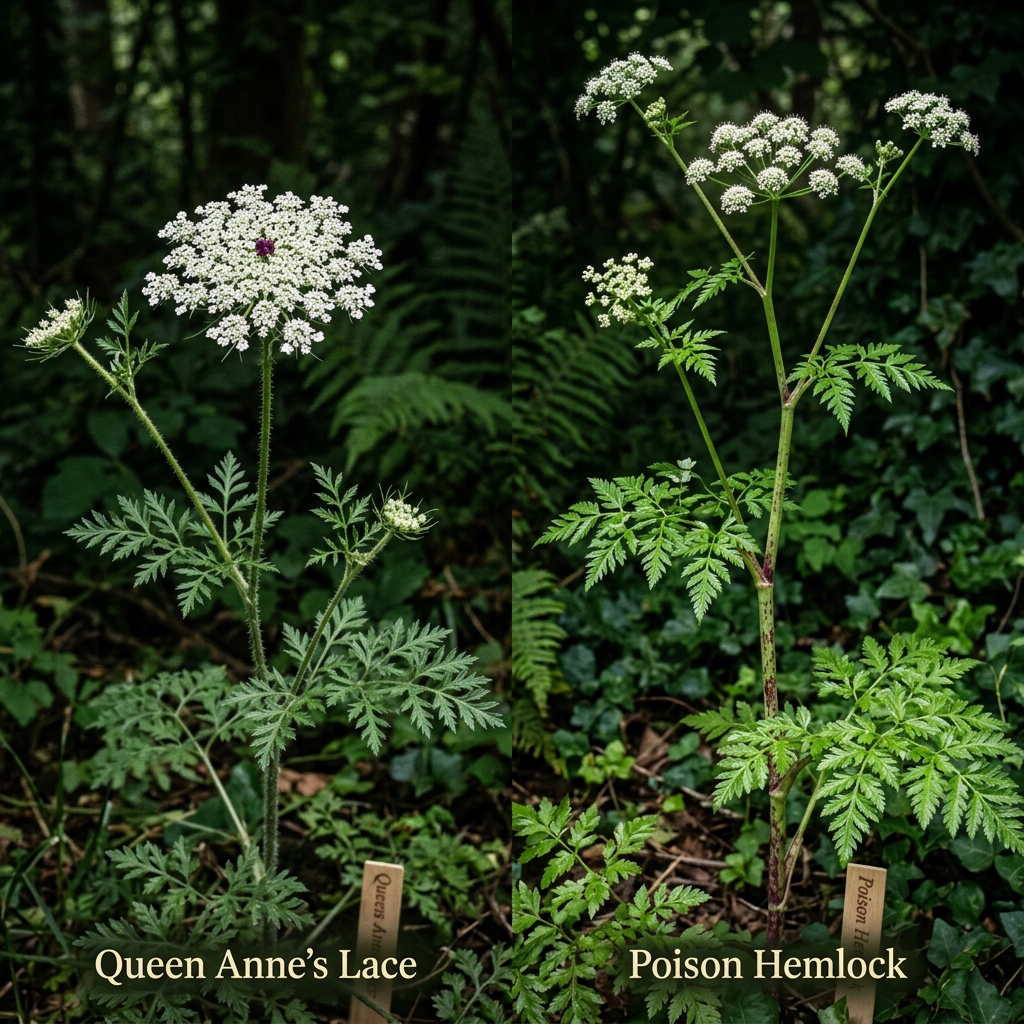
Queen Anne’s lace and poison hemlock get confused for a simple reason: at a distance, both can look like white, umbrella-shaped wildflowers from the carrot family. But the difference that actually matters is not whether one flower head looks a little flatter or prettier than the other. It is whether you are dealing with a harmless-looking plant or one that is highly poisonous.
That is why the safest advice is also the least exciting: do not rely on a single folk rule. The real difference is a pattern of clues, especially the stem. If a plant could be poison hemlock, the goal is not to win a guessing game. The goal is to avoid making contact or, worse, treating it like something edible.
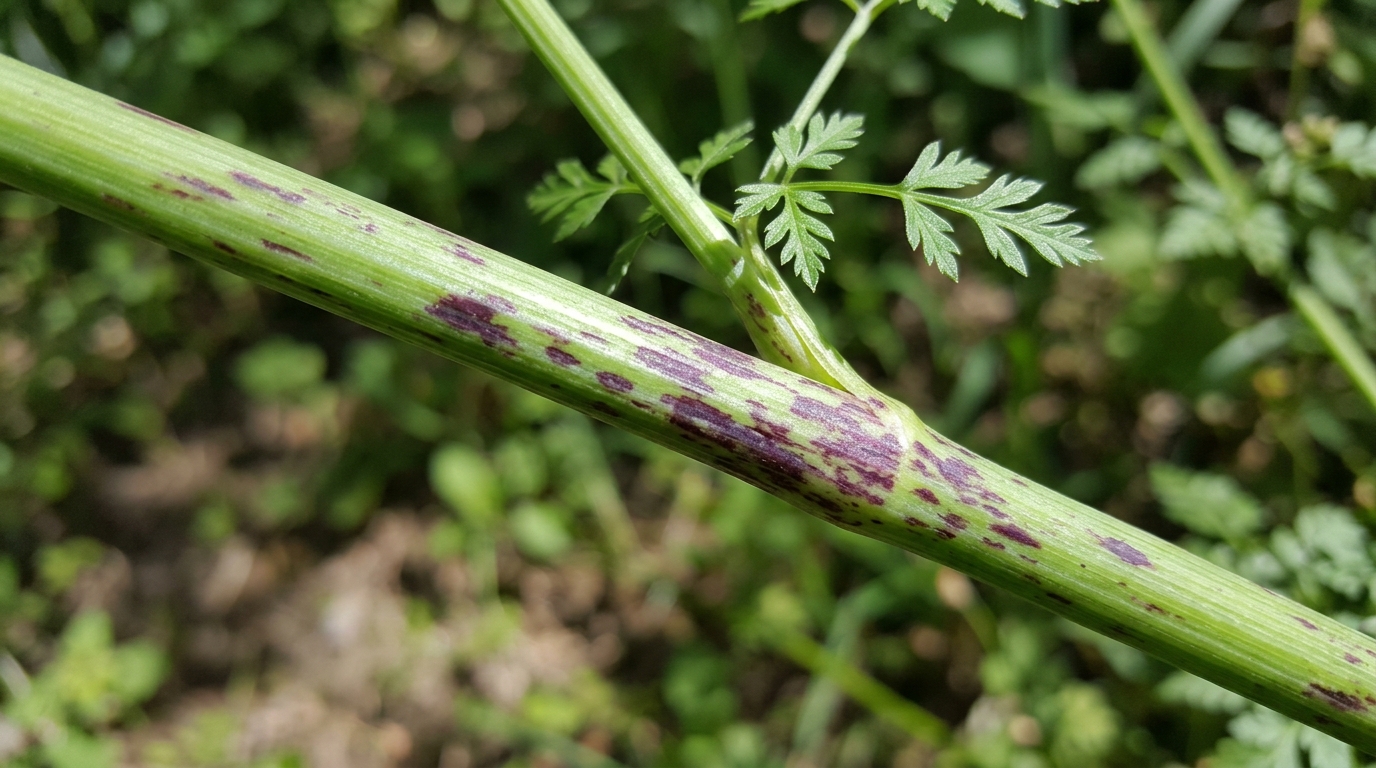
The stem tells you more than the flowers do
The most useful difference is this: poison hemlock typically has a smooth, hollow stem with purple blotches, while Queen Anne’s lace usually has a hairy stem without those purple blotches. That one contrast is more helpful than staring at the white flower clusters and hoping they look different enough.
Height can help too, though it should not be your only clue. Poison hemlock often grows much taller, commonly reaching several feet and sometimes towering over people. Queen Anne’s lace is usually shorter and less imposing. If the plant is huge, smooth-stemmed, and marked with purple, you should stop treating it like a harmless roadside flower immediately.
Why Queen Anne’s lace fools people so easily
Queen Anne’s lace, also called wild carrot, belongs to the same broader plant family, so the resemblance is real. The leaves can look lacy. The blooms can form the same kind of umbrella-like cluster. And both often show up in open, disturbed places where people are used to seeing roadside weeds.
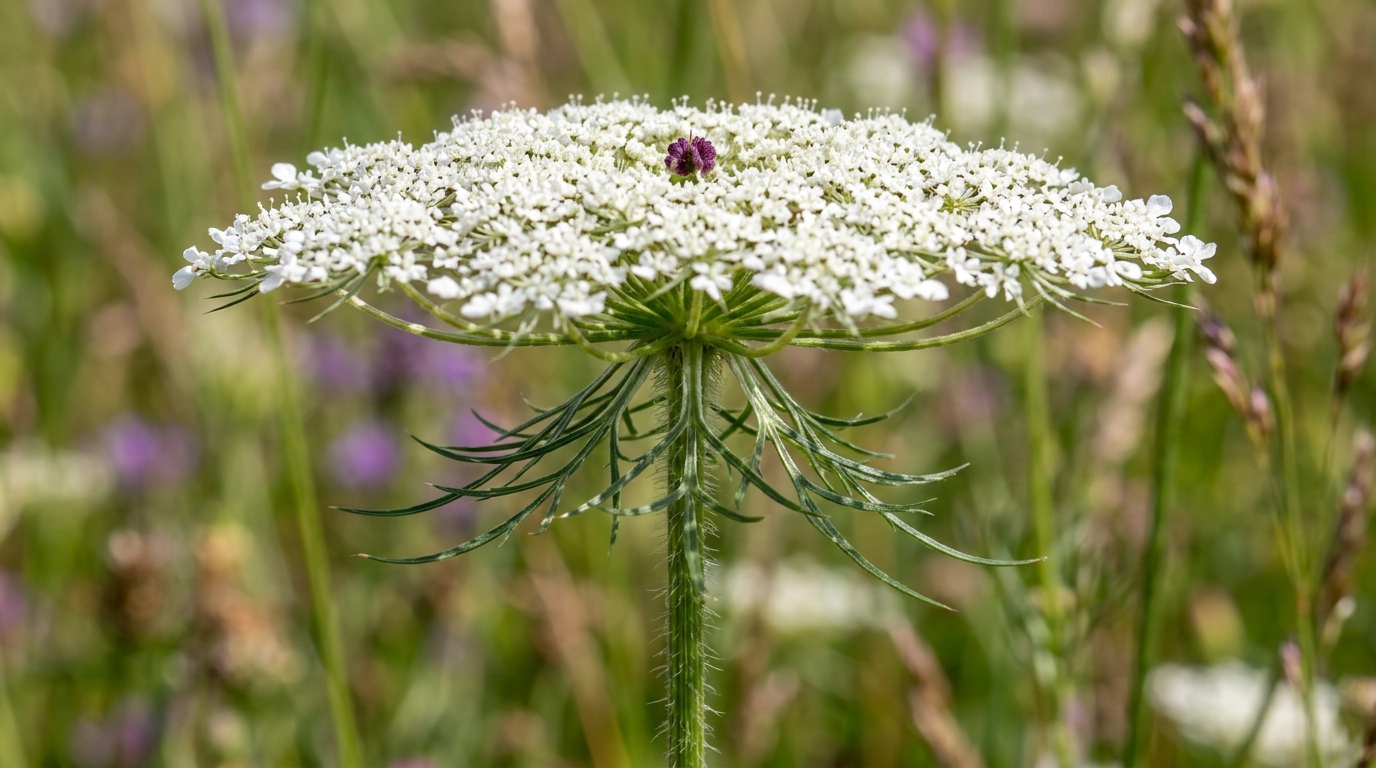
But Queen Anne’s lace usually gives itself away if you look underneath the flower head and along the stem. It often has narrow, lacy bracts under the flowers, and the stem tends to be rough or hairy instead of glossy and smooth. Those details matter more than internet myths about one dark floret in the middle or other cute shortcuts that do not always hold up.
The difference that actually matters is safety, not trivia
Poison hemlock is not just “not edible.” It is highly toxic. Extension sources warn that all parts of the plant are poisonous, and ingestion can be dangerous to both humans and animals. Some sources also note that sap contact can irritate skin, which is another reason not to handle it casually.
That shifts the question from “Can I tell these apart in one second?” to “Am I confident enough to bet my health on this ID?” For most people, the smarter answer is no. If there is doubt, do not touch it with bare hands, do not cut it for a bouquet, and absolutely do not forage or taste-test anything from that patch.
Important: One trait is never enough for a safe identification. Hair, height, flower shape, or a purple stem mark can each help, but poisonous lookalikes are exactly why foraging and backyard ID should be based on multiple confirming features, not one shortcut.
A simple side-by-side way to think about it
- Poison hemlock: smooth stem, purple blotches, often very tall, highly toxic.
- Queen Anne’s lace: hairy stem, no purple blotches, often shorter, narrow bracts under the flower head.
- Both: white umbrella-like flowers and lacy-looking foliage that can fool casual observers.
That comparison is useful, but the most important part is still what you do with uncertainty. If the plant is growing where kids, pets, or livestock might encounter it, treat a suspicious specimen seriously and get a local extension office, invasive species program, or other qualified plant expert to confirm it.
What to do if you think you found poison hemlock
Do not burn it, do not mow it casually into your face, and do not start pulling it barehanded. Several extension programs recommend protective clothing and caution with handling. In many cases, the safest next move is documentation: photograph the stem, leaves, and flower structure, then ask a qualified local resource to verify what you are seeing.
That may feel less dramatic than the social-media version of plant identification, but this is one of those cases where boring is good. A correct ID matters more than a clever shortcut.
Practical takeaway: If you are comparing Queen Anne’s lace and poison hemlock, focus first on the stem. Hairy and unblotched points more toward Queen Anne’s lace. Smooth, hollow, and purple-blotched points toward poison hemlock. But if there is any doubt, treat the plant as potentially dangerous and get expert confirmation before touching or removing it.
Keep exploring the same topic
Get the notes
One practical email when a new story is worth your time.
Short field notes, kitchen flags, and backyard context without spam or wellness fluff.
Key reminder
Use the risk badge and context together. A familiar look, label, or assumption is never enough to treat a finding as safe.