
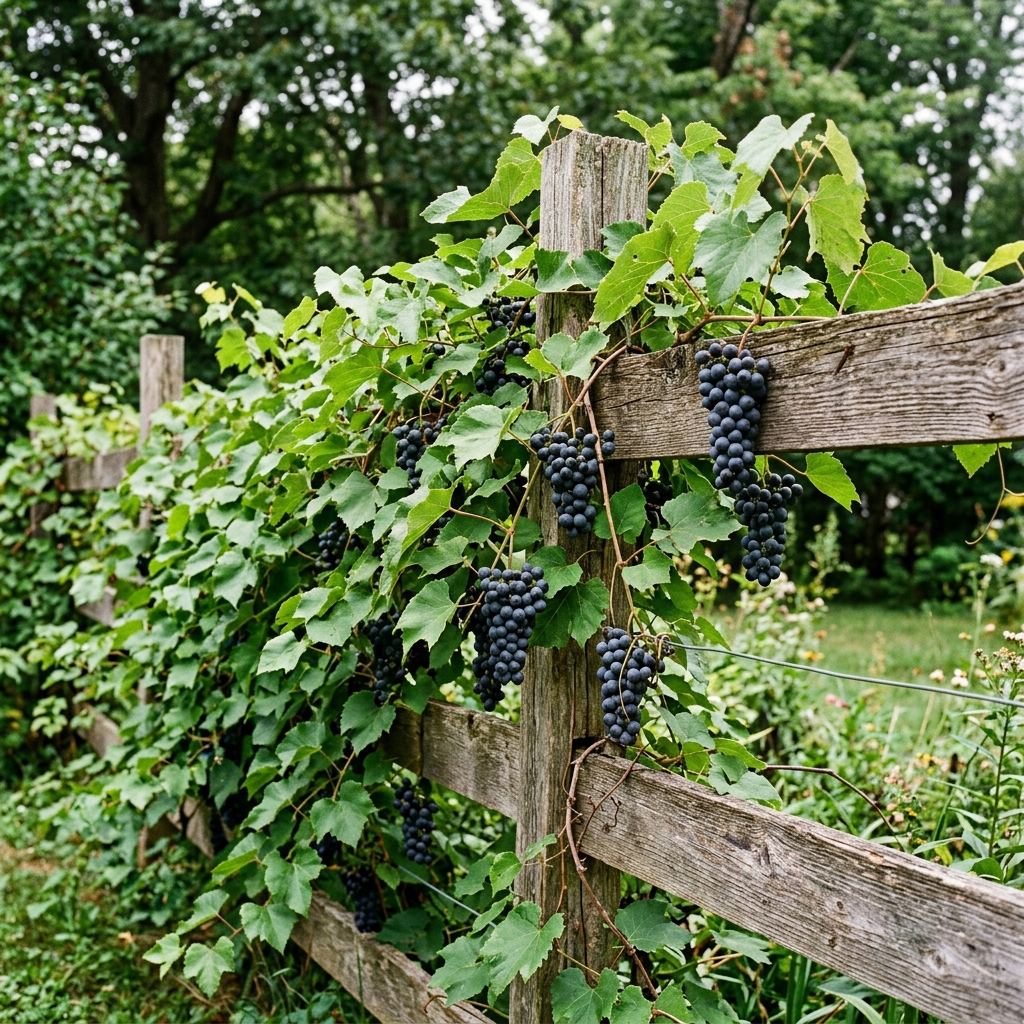
Wild grape climbs fences, trees, and hedgerows across much of the United States, so people get used to seeing it everywhere. That is exactly why moonseed is a problem. It is a native vine too, it can grow in similar places, and its dark fruit clusters can look close enough to wild grape to fool anyone moving too fast.
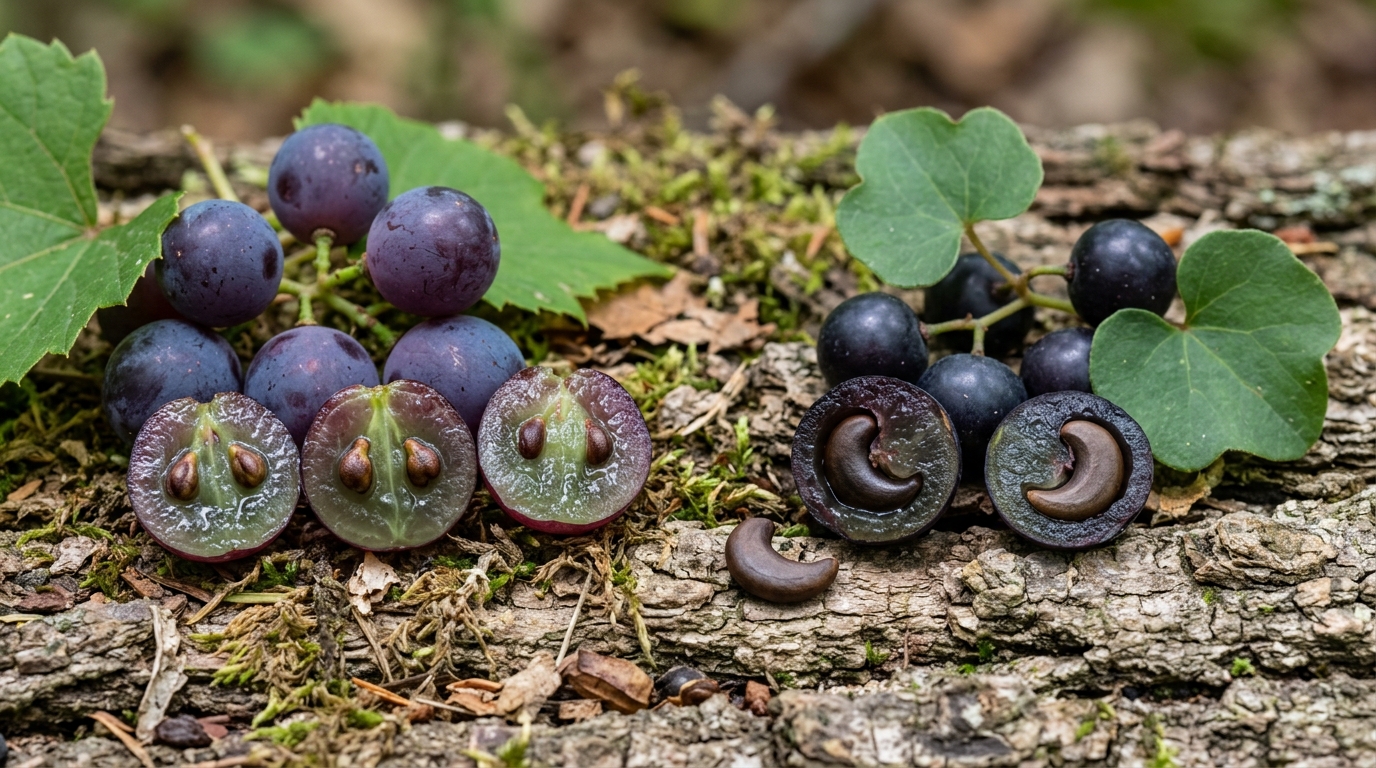
The difference that actually keeps you safe is not the leaf shape alone. Leaves vary. Light changes how plants look. Distance hides details. The most reliable warning sign is inside the fruit: moonseed has one crescent-shaped seed, while wild grapes usually have several round or oval seeds.
The seed is the difference that matters
Moonseed gets its name from that single curved seed shaped like a crescent moon. Wild grape berries do not do that. They usually contain multiple seeds, and grape vines also tend to have curling tendrils that help them climb. Moonseed lacks those grape-like tendrils, which can help, but the seed check is the point that matters most when people confuse the fruit.
That matters because moonseed berries are poisonous. This is not a casual “might upset your stomach” kind of mix-up. If you are not fully sure you are looking at wild grape, do not taste the fruit just because it is growing on a familiar-looking vine.
Why this backyard mix-up is easy to miss
Moonseed is less famous than poison ivy, which means more people walk past it without knowing it exists. That is what makes this lookalike useful to learn. It is not flashy. It is just a realistic mistake for anyone spotting berries on a climbing vine in late summer or fall.
Practical takeaway: If you think you found wild grape, do not rely on the leaf alone. Check for grape tendrils and, if you are verifying fruit, the seeds. Several seeds points toward wild grape. One crescent-shaped seed means moonseed, and that is your signal not to eat it.
Keep exploring the same topic
Get the notes
One practical email when a new story is worth your time.
Short field notes, kitchen flags, and backyard context without spam or wellness fluff.
Key reminder
Use the risk badge and context together. A familiar look, label, or assumption is never enough to treat a finding as safe.