
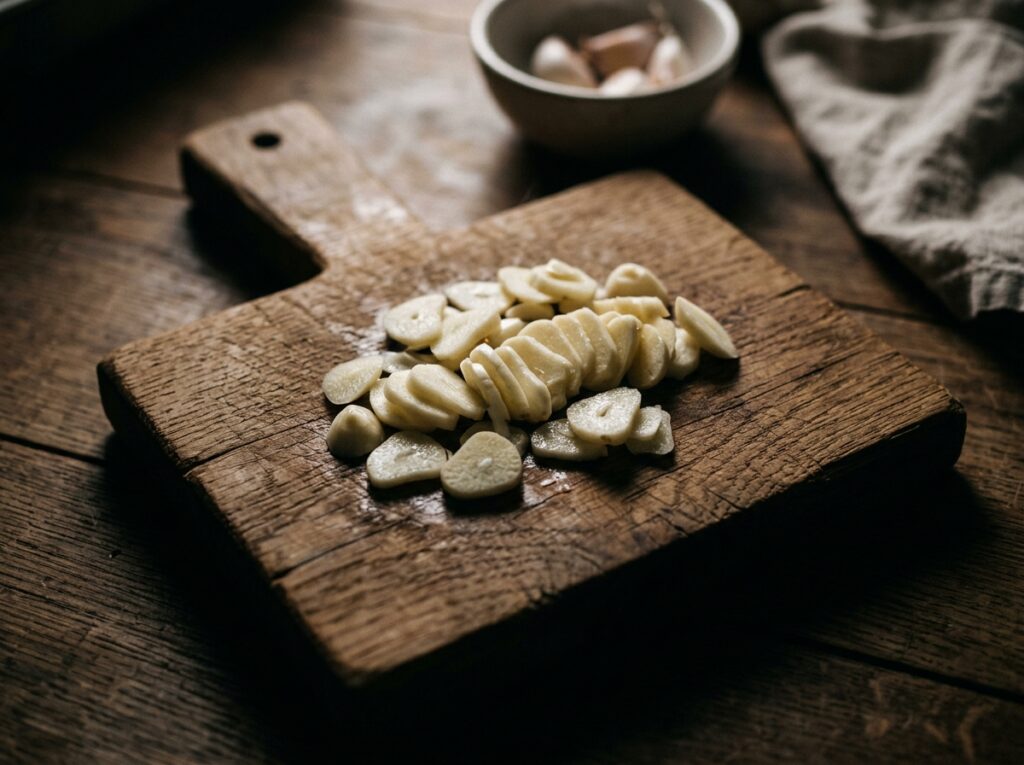
Why Garlic Tastes Better After a Short Rest
Garlic feels so familiar that most of us stop paying attention to what happens between the cutting board and the pan. But one small detail changes the flavor more than people expect: chopped or crushed garlic tastes fuller and sharper when you let it sit for a few minutes before cooking it.
That short pause is not kitchen superstition. It gives garlic time to build the compounds that create its most recognizable flavor, which means the same clove can taste flatter when rushed and much more vivid when handled with a little patience.
Why chopped garlic gets stronger as it rests
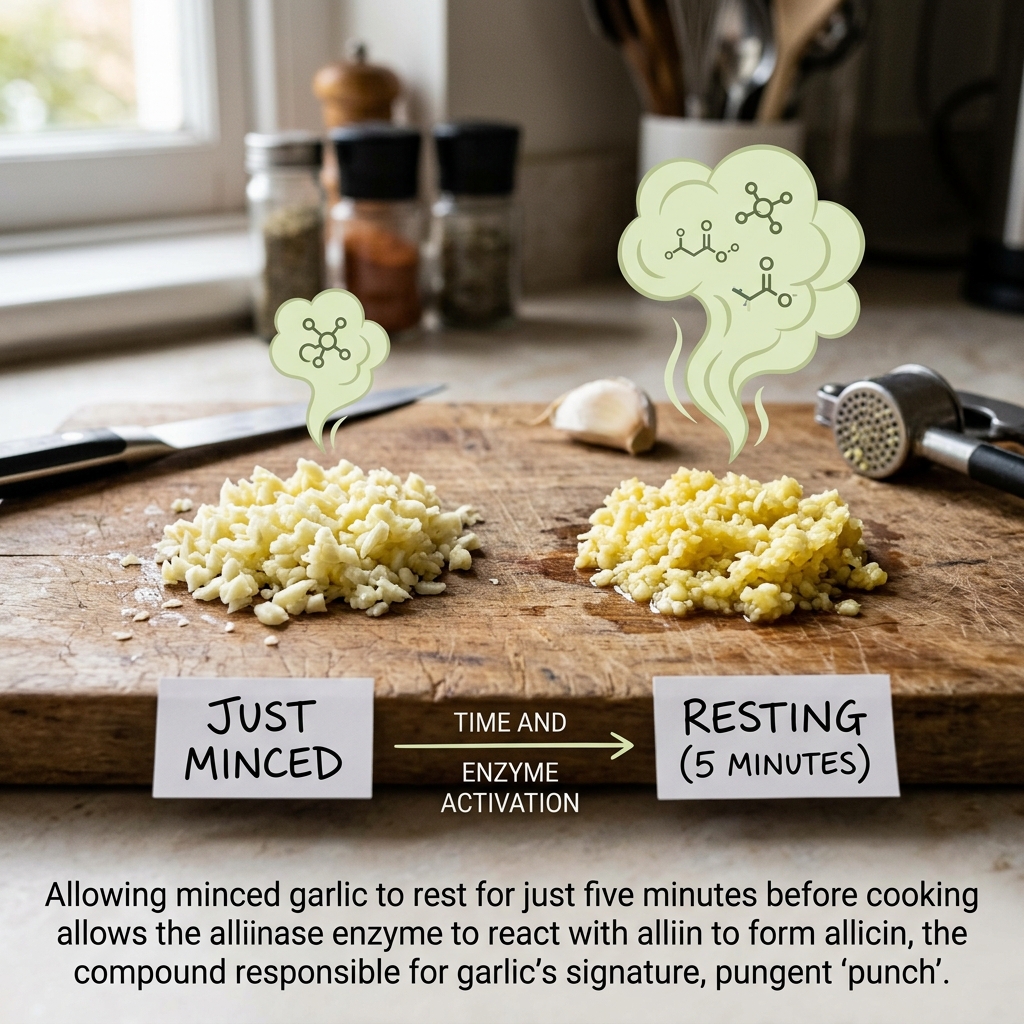
Garlic gets stronger after chopping because cutting the clove starts a chemical reaction. When the cells break open, stored compounds mix together and begin forming allicin, which is responsible for much of fresh garlic’s sharp aroma and bite.
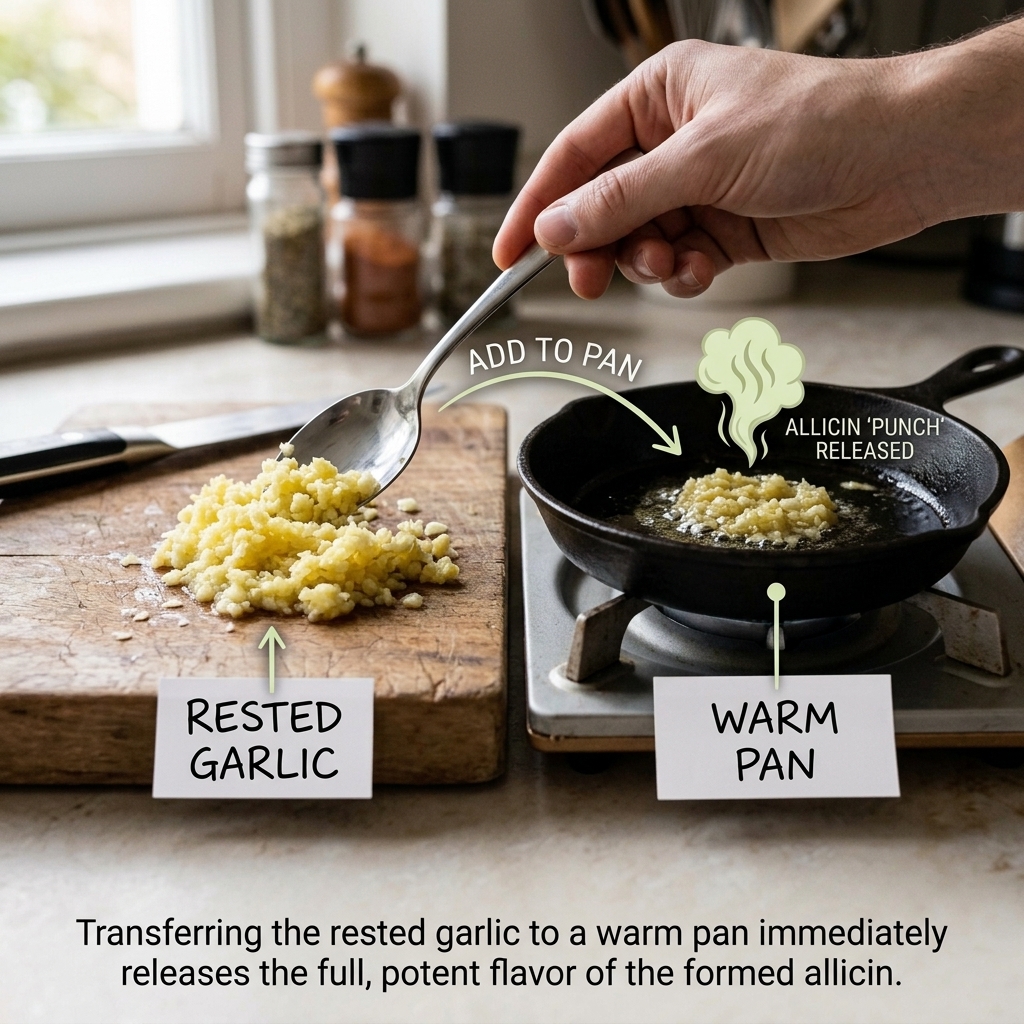
That reaction takes a little time. If garlic goes straight from the knife into a hot pan, the heat can slow or interrupt the process before the flavor fully develops. If it rests first, more of that flavor has time to build before cooking softens it.
This helps explain why one dish tastes deeply garlicky while another, using the same number of cloves, tastes oddly muted. The difference is not always the amount. Sometimes it is simply whether the garlic had a chance to become what you expected it to be.
How long should garlic rest before cooking?
About 10 minutes is the most useful rule for everyday cooking. It is long enough to improve flavor, but short enough that it fits easily into a normal prep routine.
You do not need to stand there waiting for it. The easiest method is to chop the garlic first, then use the next few minutes to do everything else.
- Mince or crush the garlic at the beginning of prep.
- Leave it on the board or in a small bowl for about 10 minutes.
- Use that time to slice onions, wash herbs, or heat the pan.
- Add the garlic once the rest of the dish is ready for it.
This matters most in recipes where garlic is supposed to be noticeable, like pasta sauces, sauteed greens, garlic butter, marinades, or yogurt sauces. In long-cooked dishes such as stews or braises, the difference is still real, but less dramatic by the time the pot is done.
Why raw, rested, and cooked garlic all taste different
Raw garlic tastes sharp because those freshly formed sulfur compounds are still intense and concentrated. Rested garlic tastes more complete because more of those compounds had time to form before heat changed them again.
Once garlic cooks, the flavor shifts. The harsh edge fades, sweetness comes forward, and the aroma turns rounder and softer. That is why rested garlic often gives you the best of both worlds: a dish that still tastes warm and mellow, but with more depth underneath.
The same logic shows up in other familiar foods too. A tiny handling detail can change what you think you are tasting, which is also why label language and pantry habits are worth checking more closely. If you enjoy this kind of kitchen detail, a related read could point to a Grocery Truth raw honey labels.
When this garlic trick matters most on a weeknight
This trick matters most when garlic is carrying the dish instead of hiding in the background. If you want that clean, distinct garlic flavor, the resting step is worth building into your routine.
It also comes with a few limits. Resting does not rescue burned garlic, and jarred pre-minced garlic does not behave exactly like fresh cloves. Very finely mashed garlic can taste stronger than sliced garlic because more of the clove has been broken open, but it can also burn faster once it hits the heat.
- Use fresh garlic when the flavor really matters.
- Chop it early instead of at the last second.
- Keep the pan from being excessively hot when you add it.
- Cook just until fragrant, not until dark brown.
None of this is complicated, which is part of why it is so useful. You are not buying a new ingredient or learning a difficult technique. You are just changing the order of a step you already do.
The next time you cook with fresh garlic, mince it first and let it rest for about 10 minutes before it goes into the pan. Then compare that dish with the way you usually make it. It is one of the easiest kitchen tests you can verify for yourself in a single meal.
Keep exploring the same topic
Get the notes
One practical email when a new story is worth your time.
Short field notes, kitchen flags, and backyard context without spam or wellness fluff.
Key reminder
Use the risk badge and context together. A familiar look, label, or assumption is never enough to treat a finding as safe.